🩺 Clinical Summary: Infant Growth in Cow’s Milk Protein Allergy
- ✓ Key Finding: Infants with CMPA receiving hypoallergenic formulas showed growth parameters within normal ranges and aligned with WHO growth standards.
- ✓ Evidence: In a prospective review of 58 infants with cow’s milk protein allergy, weight, length and head circumference remained appropriate in both EHF and AAF groups during the first year of life.
- ✓ Practice Tip: Monitor growth regularly in infants with CMPA, particularly those requiring amino acid-based formula, as this may reflect more severe or complex clinical presentations.
Infants with cow’s milk protein allergy (CMPA) may be at risk of impaired growth due to dietary restrictions, feeding difficulties and gastrointestinal symptoms. Hypoallergenic formula CMPA management includes extensively hydrolyzed formula (EHF) or amino acid-based formula (AAF). However, data on their impact on growth during the first year of life remain limited and sometimes inconsistent.
This prospective review evaluated infant growth in cow’s milk protein allergy by assessing growth parameters in infants with CMPA receiving EHF or AAF during the first year of life. The study aimed to determine whether these nutritional strategies support normal growth trajectories and to compare outcomes between formula types.

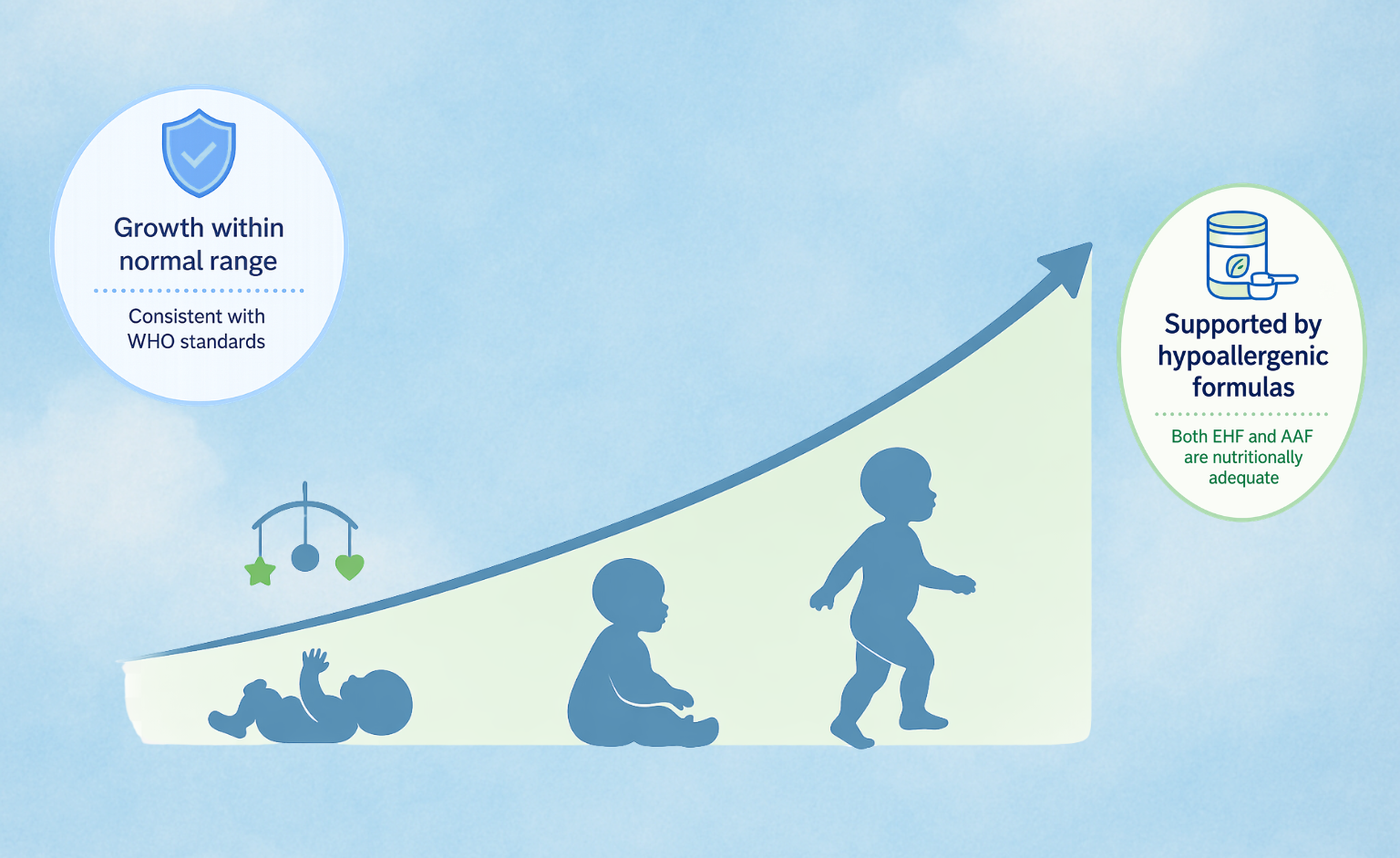
Conceptual overview of growth in infants with CMPA receiving hypoallergenic formulas
Key Clinical Insights on CMPA Infant Growth
Based on the follow-up of 58 infants with confirmed CMPA, growth parameters including weight, length and head circumference, remained within normal ranges and were consistent with WHO growth standards in both formula groups.
Both extensively hydrolyzed formula CMPA management and amino acid-based formula CMPA management supported appropriate growth during infancy.
Importantly, no growth impairment was identified in either group, suggesting that timely diagnosis and appropriate nutritional management can help maintain normal growth trajectories in infants with CMPA.
EHF vs AAF Formula: Growth Parameters in Infants with CMPA
Differences between formula types were observed:
- Infants fed EHF generally showed higher growth parameters across follow-up
- A significant difference was observed in length at 12 months, favoring the EHF group
- Differences in weight and head circumference were not clinically significant at one year after adjustment
- Infants receiving AAF were diagnosed and started on special feeding earlier, likely reflecting more severe clinical presentations
These findings suggest that EHF vs AAF formula outcomes should be interpreted in clinical context. Lower growth parameters in the AAF group may reflect disease severity rather than formula inadequacy.
Implications for Nutritional Management of CMPA
This study provides reassurance that hypoallergenic formulas can support normal growth in infants with CMPA when appropriately prescribed and monitored.
In clinical practice, healthcare professionals should:
- Ensure early recognition and diagnosis of CMPA
- Initiate appropriate hypoallergenic feeding without delay
- Use EHF as the first-line nutritional option when clinically appropriate
- Reserve AAF for severe cases or inadequate response to EHF
- Monitor weight, length and head circumference regularly, particularly in infants requiring AAF
Overall, early diagnosis, appropriate hypoallergenic feeding and regular growth monitoring remain central to the nutritional management of CMPA.
Access the full publication: https://doi.org/10.1186/s40795-024-00901-6
Source
BMC Nutrition, 2024
Malekiantaghi A. et al.
DOI: 10.1186/s40795-024-00901-6