🩺 Clinical Summary
- ✓ Key Finding: Zinc supplementation in pediatric diarrhea may support recovery and reduce diarrhea duration, particularly in acute watery diarrhea.
- ✓ Evidence: A systematic review of 38 RCTs found that zinc supplementation reduced diarrhea duration by approximately 13 hours.
- ✓ Practice Tip: Use zinc as an adjunct to ORS, while considering zinc dose and counselling caregivers on vomiting risk.
Diarrhea remains a major cause of morbidity and mortality in children, particularly in low- and middle-income settings. In the management of diarrhea in pediatrics, prevention and correction of dehydration remain the first priority, with oral rehydration solution for diarrhea serving as the cornerstone of care.
Zinc supplementation in pediatric diarrhea is recommended as an evidence-based adjunct to rehydration therapy. Zinc supports immune function, contributes to intestinal epithelial integrity, and may help improve recovery from diarrheal illness. However, its clinical use continues to require careful consideration of efficacy, optimal dosing, and tolerability, particularly the risk of vomiting.
This systematic review and meta-analysis evaluated the role of zinc for acute diarrhea in children and persistent diarrhea, including recovery outcomes, duration of illness, zinc dose in pediatric diarrhea, and adverse effects. The review included 38 randomized controlled trials involving 33,693 children under 10 years of age across diverse clinical settings.
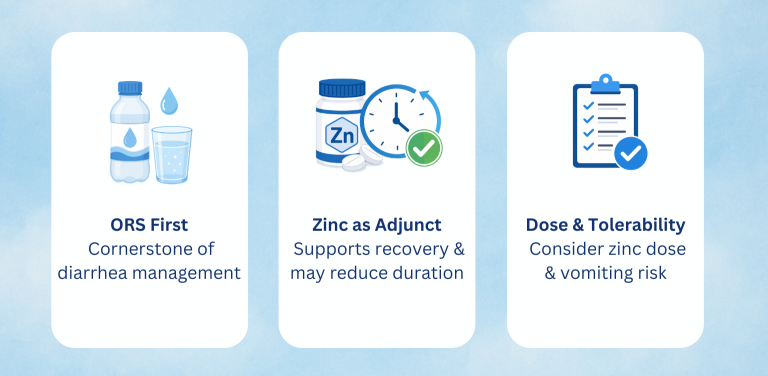
Figure. Key considerations in the supportive management of pediatric diarrhea.
Key Clinical Insights on Efficacy of Zinc Supplementation in Pediatric Diarrhea
In children with acute diarrhea, zinc supplementation was associated with a greater proportion of children recovering from diarrhea at last follow-up compared with placebo. Zinc also reduced diarrhea duration by approximately 13 hours, supporting its role as part of childhood diarrhea treatment.
These findings reinforce the value of zinc for acute diarrhea in children as an adjunct to standard care, particularly when used alongside appropriate rehydration strategies.
For persistent diarrhea, zinc supplementation was also associated with a higher proportion of children recovering from diarrhea. Importantly, mortality outcomes were comparable between zinc and placebo groups, suggesting that the main clinical benefits relate to recovery and illness duration rather than mortality reduction in the included trials.
Zinc Dose and Vomiting Risk in Children with Diarrhea
Although zinc supplementation showed clinical benefit, tolerability remains an important consideration. The review found a higher risk of vomiting in children receiving zinc compared with placebo, making vomiting as an adverse effect of zinc supplementation an important point for caregiver counselling.
Dose appears to influence tolerability. Lower-dose zinc regimens were associated with fewer vomiting episodes compared with 20 mg zinc, while continued diarrhea beyond five days was comparable between groups.
These findings suggest that optimizing the zinc dose in pediatric diarrhea may help preserve clinical benefit while reducing vomiting risk. The authors conclude that zinc should continue to be recommended in children with acute or persistent diarrhea, while highlighting the need to reassess dosing strategies.
Implications for Pediatric Diarrhea Management
This review reinforces zinc supplementation in pediatric diarrhea as an evidence-based adjunct to standard diarrhea management, while emphasizing the importance of appropriate dose selection and caregiver counselling.
In clinical practice, healthcare professionals should:
- Prioritize oral rehydration solution for diarrhea to prevent and manage dehydration
- Consider zinc supplementation as part of childhood diarrhea treatment, especially in acute watery diarrhea
- Counsel caregivers that vomiting may occur as an adverse effect of zinc supplementation
- Recognize that lower-dose zinc regimens may improve tolerability while maintaining comparable clinical outcomes
- Apply zinc recommendations within local and international pediatric diarrhea management guidelines
Overall, zinc supplementation remains relevant in the management of acute and persistent diarrhea in children. Further multi-country randomized trials are needed to better define the optimal dose, duration and safety profile.
Access the full publication: https://doi.org/10.7189/jogh.14.04212
Source
Journal of Global Health, 2024
Ali A.A. et al.
DOI: 10.7189/jogh.14.04212